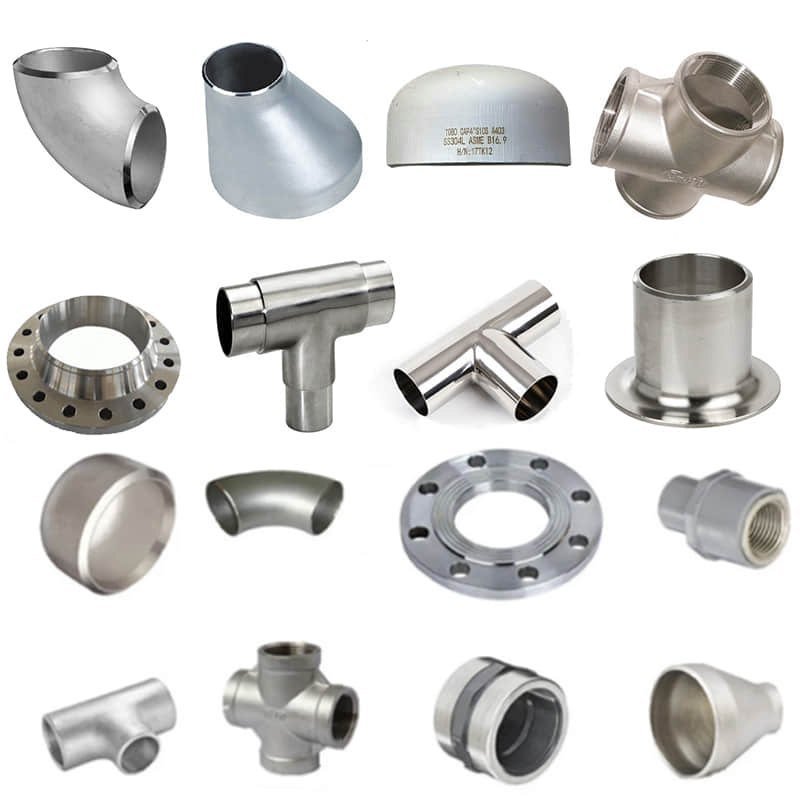
GI Pipes & Fittings

Complete range of galvanized iron pipes and fittings for plumbing and industrial applications

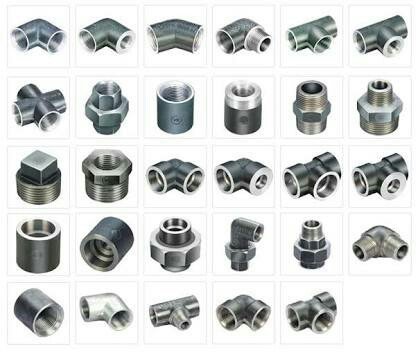
GI Pipes & Fittings Collection

Galvanized iron pipes and fittings for durable installations

GI Pipe

GI Pipes & Fittings Overview

Durable Construction
GI Pipes Fundamentals:
  • Galvanized Coating: Zinc coating for corrosion resistance
  • Standard Sizes: ½" to 8" diameters available
  • Weight Classification: Light, Medium, Heavy grades
  • Applications: Water supply, plumbing, industrial lines
GI Pipe Specifications:
Nominal Size Outside Diameter Light Grade Medium Grade Heavy Grade Working Pressure
½" (15mm) 21.3 mm 2.00 mm 2.60 mm 3.20 mm 15-25 bar
¾" (20mm) 26.9 mm 2.30 mm 2.90 mm 3.60 mm 15-25 bar
1" (25mm) 33.7 mm 2.60 mm 3.20 mm 4.00 mm 15-25 bar
2" (50mm) 60.3 mm 2.90 mm 3.60 mm 4.50 mm 10-20 bar

Galvanized Iron Pipes

Standard Piping
Features & Specifications:
  • Material: Mild Steel with Zinc Coating
  • Standards: IS 1239, IS 3589, ASTM A53
  • Coating: Hot-dip galvanized
  • Grades: Light, Medium, Heavy
  • Sizes: ½" to 8" (15mm to 200mm)
  • Length: 6 meters standard
  • Threading: BSP threads both ends
  • Applications: Water lines, plumbing
Hot-dip galvanized mild steel pipes with excellent corrosion resistance for water supply and plumbing applications.
Key Benefits
  • Corrosion Resistant
  • Long Service Life
  • High Strength
  • Easy Installation
  • Cost Effective
  • Standard Threads

GI Fittings

Connection Solutions
Basic Fitting Types:
  • Elbow 90° / 45° – Change direction
  • Tee – Branching connections
  • Coupler / Union – Join two pipes
  • Reducer / Reducer Bush – Change pipe size
  • End Cap – Seal pipe end
  • Male/Female Threaded Adaptors – Connect to metal threads
  • Cross – Four-way connections
  • Nipple – Short pipe connections
Complete range of galvanized iron fittings for creating reliable piping networks with standard BSP threads.
Fitting Specifications
  • Material: Galvanized Mild Steel
  • Thread: BSP (British Standard Pipe)
  • Pressure: 10-25 bar rating
  • Temperature: Up to 120°C
  • Coating: Hot-dip galvanized
Elbows
  • 90° Elbow: Right angle turn
  • 45° Elbow: Gentle direction change
  • Equal Elbow: Same size both ends
  • Reducing Elbow: Different sizes
Tees & Crosses
  • Equal Tee: All branches same size
  • Reducing Tee: Branch different size
  • Cross: Four-way connection
  • Lateral: 45° branch connection
Connectors
  • Coupler: Straight connection
  • Union: Easy disconnection
  • Reducer: Size reduction
  • Bush: Thread size adapter

GI Pipes & Fittings Selection Guide

Selection Parameters:
  • Fluid Type: Water, Air, Non-corrosive fluids
  • Pressure: Working pressure requirements
  • Temperature: Operating temperature range
  • Size: Flow requirements and pipe diameter
  • Environment: Indoor/outdoor, corrosive conditions
Installation Considerations:
  • Thread Sealant: Teflon tape or pipe dope
  • Tools: Pipe wrenches, thread cutters
  • Clearance: Space for wrench operation
  • Support: Proper pipe hangers and supports
  • Expansion: Thermal expansion allowance
GI Pipe Selection Matrix:
Application Recommended Grade Typical Size Pressure Rating Key Considerations
Domestic Water Supply Medium Grade ½" - 1" 15-20 bar Corrosion resistance, easy installation
Industrial Water Lines Heavy Grade 1" - 4" 15-25 bar High pressure, durability
Fire Fighting Systems Heavy Grade 2" - 6" 10-15 bar Reliability, emergency service
Irrigation Systems Medium Grade 1" - 3" 10-15 bar Weather resistance, cost-effective
Compressed Air Lines Medium Grade ½" - 2" 10-15 bar Moisture resistance, clean interior

CPVC & UPVC Fittings

Complete range of CPVC and UPVC fittings for hot/cold water and chemical applications

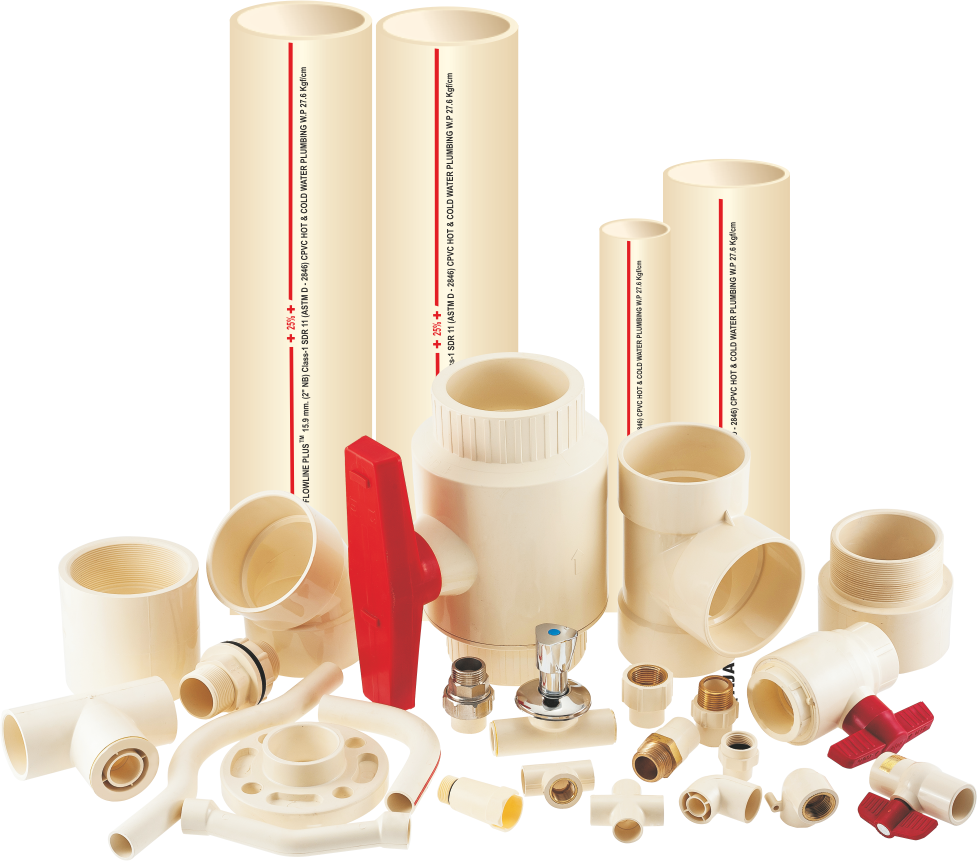
CPVC/UPVC Fittings Collection

Premium CPVC and UPVC fittings for plumbing systems

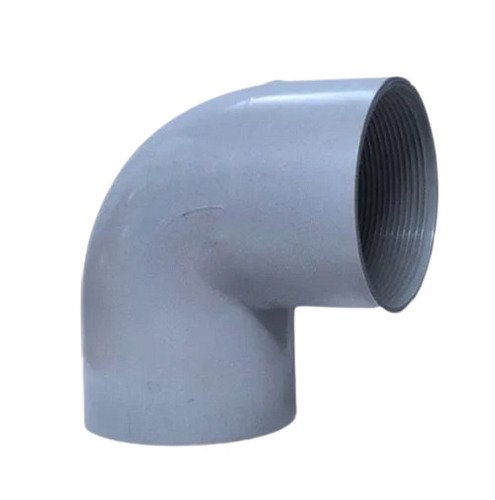
CPVC Elbow

CPVC & UPVC Fittings Overview

Plastic Piping
CPVC vs UPVC Comparison:
  • CPVC: Chlorinated Polyvinyl Chloride - Suitable for Hot & Cold Water (up to 93°C)
  • UPVC: Unplasticized Polyvinyl Chloride - For Cold Water only (up to 60°C)
  • Chemical Resistance: Both resistant to many chemicals
  • Pressure Rating: Higher pressure capability than standard PVC
CPVC Pressure Ratings (SDR 11 per IS/ASTM):
Size Pressure @27°C Pressure @82°C Maximum Temperature Applications
½" (15mm) ~28.1 kg/cm² ~6.9 kg/cm² 93°C Hot water lines
¾" (20mm) ~28.1 kg/cm² ~6.9 kg/cm² 93°C Main supply lines
1" (25mm) ~28.1 kg/cm² ~6.9 kg/cm² 93°C Industrial lines
2" (50mm) ~28.1 kg/cm² ~6.9 kg/cm² 93°C Main distribution

CPVC Pipe Fittings & Joints

Complete Range
Features & Specifications:
  • Material: Chlorinated PVC
  • Temperature: -10°C to +93°C
  • Pressure: Up to 28 kg/cm² @27°C
  • Standards: IS 15778, ASTM D2846
  • Sizes: ½" to 4"
  • Joint Type: Solvent cement socket
  • Color: Cream/light grey
  • Applications: Hot & cold water
General pack of CPVC joint fittings for plumbing and irrigation applications with solvent cement joints.
Key Benefits
  • High Temperature Resistance
  • Corrosion Free
  • Chemical Resistant
  • Easy Installation
  • Low Maintenance
  • Long Life

CPVC End Cap 1/2"

Pipe Sealing
Features & Specifications:
  • Size: ½" (15mm)
  • Type: Socket end cap
  • Material: CPVC compound
  • Joint: Solvent cement joint
  • Use: Seal pipe ends
  • Pressure: Full system rating
  • Installation: Permanent seal
  • Application: Termination points
Leak-proof end cap fitting for permanently sealing ½" CPVC pipe ends in plumbing systems.
Applications
  • Pipe Line End Points
  • Future Extension Points
  • Test Point Closures
  • Temporary Line Stoppers
  • Maintenance Points

QUIFF CPVC Tee Fitting 3/4" Pack

Branching Solution
Features & Specifications:
  • Size: ¾" (20mm)
  • Type: Equal tee
  • Brand: QUIFF
  • Quantity: Multiple in pack
  • Material: Premium CPVC
  • Pressure: Full system rating
  • Use: Pipe branching
  • Application: Distribution lines
Tee fitting for pipe branching applications in ¾" CPVC plumbing systems with solvent cement joints.
Pack Benefits
  • Cost Effective
  • Consistent Quality
  • Reduced Inventory
  • Bulk Savings
  • Project Ready

Supreme CPVC Fittings Coupler 2" Set

Large Diameter
Features & Specifications:
  • Size: 2" (50mm)
  • Type: Straight coupler
  • Brand: Supreme
  • Set Contents: Multiple couplers
  • Material: High-grade CPVC
  • Use: Joining two 2" pipes
  • Application: Main distribution lines
  • Pressure: 28 kg/cm² @27°C
Coupler set for joining two 2″ CPVC pipes in main water distribution systems with reliable solvent cement joints.
Large Diameter Applications
  • Main Water Supply
  • Industrial Lines
  • Fire Fighting Systems
  • Irrigation Mains
  • Commercial Buildings

Astral CPVC Brass Tee Fittings 3/4"

Premium Quality
Features & Specifications:
  • Size: ¾" (20mm)
  • Type: Brass reinforced tee
  • Brand: Astral
  • Material: CPVC with brass insert
  • Features: Enhanced durability
  • Corrosion: Brass corrosion resistance
  • Pressure: Higher pressure rating
  • Application: Critical systems
Brass reinforced CPVC tee for enhanced durability and corrosion resistance in critical plumbing applications.
Premium Features
  • Brass Reinforcement
  • Higher Pressure Rating
  • Enhanced Durability
  • Corrosion Resistant
  • Long Service Life
CPVC/UPVC Fitting Types:
Fitting Type Description Common Sizes Typical Use
Elbow 90° 90 degree direction change ½" to 4" Corner installations
Elbow 45° 45 degree direction change ½" to 4" Gentle turns
Tee Three-way branching ½" to 4" Distribution points
Coupler Straight pipe connection ½" to 4" Joining pipes
Reducer Pipe size reduction Various combinations Size transitions
End Cap Pipe end sealing ½" to 4" Line termination
Adapter Threaded connections ½" to 2" Metal to plastic
Union Removable connection ½" to 2" Maintenance points

CPVC/UPVC Installation Guide

Installation Steps:
  • Cutting: Use proper pipe cutter for clean cuts
  • Deburring: Remove sharp edges and burrs
  • Cleaning: Clean pipe and fitting surfaces
  • Priming: Apply primer to both surfaces
  • Cementing: Apply solvent cement evenly
  • Assembly: Join immediately with quarter-turn
Important Considerations:
  • Cure Time: Allow proper curing before pressure testing
  • Temperature: Install above 4°C for proper bonding
  • Expansion: Allow for thermal expansion in long runs
  • Support: Proper hangers every 1-1.5 meters
  • UV Protection: Protect from direct sunlight exposure
  • Tools: Use CPVC-specific cement and primer

MS & SS Pipes

Complete range of Mild Steel and Stainless Steel pipes for industrial applications

MS/SS Pipes Collection

Mild Steel and Stainless Steel pipes for industrial applications

MS Pipe

MS & SS Pipes Overview

Industrial Piping
Pipe Manufacturing Methods:
  • ERW (Electric Resistance Welded): Most common for low/medium pressure
  • Seamless: No weld seam, for high pressure/temperature
  • CDW (Cold Drawn Welded): Cold worked for better finish
  • DSAW (Double Submerged Arc Welded): For large diameter pipes
Wall Thickness Classification (IS 1239):
Nominal Bore Light (A) Medium (B) Heavy (C) Application
15 (½") 2.00 mm 2.60 mm 3.20 mm Small lines
25 (1") 2.60 mm 3.20 mm 4.00 mm General purpose
50 (2") 2.90 mm 3.60 mm 4.50 mm Main lines
100 (4") 3.60 mm 4.00 mm 5.40 mm Large distribution

Mild Steel (MS) Pipes

Carbon Steel
Features & Specifications:
  • Material: Low carbon steel (mild steel)
  • Grades: IS 1239, IS 3589, ASTM A53
  • Types: ERW or Seamless
  • Carbon Content: 0.05-0.25%
  • Sizes: ½" to 24"
  • Length: 6-12 meters
  • Finish: Black, galvanized, painted
  • Applications: General industrial
Mainly carbon steel/mild steel pipes supplied as welded (ERW) or seamless for various industrial applications.
MS Pipe Advantages
  • High Strength
  • Cost Effective
  • Easy Fabrication
  • Good Weldability
  • Wide Availability
  • Versatile Applications

Stainless Steel (SS) Pipes

Corrosion Resistant
Features & Specifications:
  • Common Grades: 304, 304L, 316, 316L
  • Special Grades: 202, 310S, 321, Duplex
  • Standards: ASTM A312, A269, A213
  • Dimension Standard: ANSI/ASME B36.19M
  • Chromium Content: 10.5% minimum
  • Nickel Content: Varies by grade
  • Types: Seamless & welded
  • Applications: Corrosive services
ASTM A312, A269, A213, ASME SA312 / SA269 standards for seamless & welded SS pipes in various grades for corrosive applications.
SS Grade Applications
  • 304/304L: General purpose
  • 316/316L: Chemical & marine
  • 321: High temperature
  • Duplex: High strength corrosive
  • 310S: Extreme temperature
304 / 304L
  • Cr: 18-20%
  • Ni: 8-10.5%
  • Carbon: 0.08% max (0.03% for L)
  • Use: General purpose
316 / 316L
  • Cr: 16-18%
  • Ni: 10-14%
  • Mo: 2-3%
  • Use: Chemical/marine
321 / 310S
  • Cr: 17-19% / 24-26%
  • Ni: 9-12% / 19-22%
  • Ti: 5×C min (321)
  • Use: High temperature

MS/SS Pipe Selection Guide

Selection Parameters:
  • Fluid Type: Water, chemicals, oil, gas, steam
  • Temperature: Operating temperature range
  • Pressure: Working and design pressure
  • Environment: Corrosive, abrasive, outdoor
  • Size: Flow requirements and diameter
Material Selection:
  • Budget: MS for cost-effective solutions
  • Corrosion: SS for chemical services
  • Temperature: SS for high temperature
  • Pressure: Seamless for high pressure
  • Hygiene: SS for food/pharmaceutical
Pipe Selection Matrix:
Application Recommended Pipe Grade/Type Wall Thickness Key Considerations
Water Supply Lines MS ERW Pipe IS 1239 Medium Schedule 40 Cost-effective, durable
Chemical Process SS Seamless Pipe 316/316L Schedule 10S-40S Corrosion resistance
Steam Lines MS Seamless Pipe ASTM A106 Gr.B Schedule 80 High temperature
Food Industry SS Welded Pipe 304/304L Schedule 5S-10S Hygienic, cleanable
Oil & Gas MS Seamless Pipe API 5L Schedule 40-160 High pressure
Marine Applications SS Pipe 316L Schedule 40S Salt water resistance

MS Flanges

Complete range of mild steel flanges for pipe connections and joints

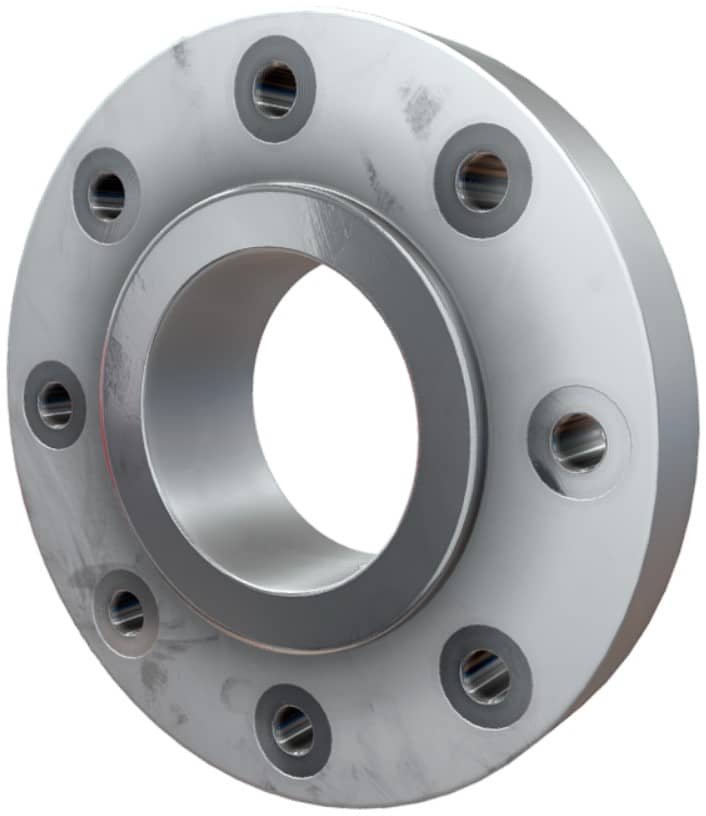
MS Flanges Collection

Mild steel flanges for reliable pipe connections

Slip On Flange

MS Flanges Overview

Pipe Connections
Flange Specifications:
  • Material: IS 2062, ASTM A105, ASTM A106, ASTM A350
  • Pressure Rating: ANSI Class 150 to 2500
  • Size Range: ½" to 48" (15mm to 1200mm)
  • Standards: IS 6392, IS 1538, IS 5131, DIN, ANSI
Types of MS Flanges:
Type Description Best For Pressure Range
Slip On (SO) Pipe slips inside flange, welded Low/medium pressure Class 150-300
Weld Neck (WN) For high pressure & temperature Critical services Class 150-2500
Blind (BL) Closes pipeline end Line isolation All classes
Socket Weld (SW) Small bore high pressure Small lines Class 300-600
Threaded (TH) No welding required Non-weldable pipes Class 150-300
Lap Joint (LJ) With stub end Frequent dismantling Class 150-300
Ring Type Joint (RTJ) High pressure sealing High pressure services Class 600-2500

Slip On (SO) Flanges

Easy Installation
Features & Specifications:
  • Design: Pipe slips inside flange
  • Welding: Fillet weld both sides
  • Pressure: ANSI Class 150-300
  • Sizes: ½" to 48"
  • Cost: Most economical
  • Installation: Easy alignment
  • Use: Low/medium pressure
  • Applications: General services
Economical flange type where pipe slips inside the flange and is welded both inside and outside for general service applications.
Advantages
  • Cost Effective
  • Easy Installation
  • Good Alignment
  • Reduced Welding Time
  • Wide Availability

Weld Neck (WN) Flanges

High Performance
Features & Specifications:
  • Design: Long tapered hub
  • Welding: Butt weld to pipe
  • Pressure: ANSI Class 150-2500
  • Sizes: ½" to 48"
  • Strength: High stress resistance
  • Use: Critical services
  • Applications: High P/T services
  • Standards: ASME B16.5, B16.47
Premium flange type with long tapered hub for high pressure and temperature services, butt welded to pipe for maximum strength.
High Performance Features
  • High Pressure Rating
  • Excellent Strength
  • Reduced Turbulence
  • Good Fatigue Resistance
  • Reliable in Critical Service

Blind (BL) Flanges

Line Isolation
Features & Specifications:
  • Design: Solid disc without bore
  • Function: Closes pipeline end
  • Pressure: All ANSI classes
  • Sizes: ½" to 48"
  • Use: Isolation, future connection
  • Installation: Bolted to mating flange
  • Applications: Pressure testing
  • Materials: Same as line flanges
Solid disc flange used to close the end of pipelines, valves, or pressure vessel openings for isolation or future connections.
Applications
  • Pipeline Isolation
  • Pressure Testing
  • Future Connection Points
  • Maintenance Access
  • Inspection Points

Socket Weld (SW) Flanges

Small Bore
Features & Specifications:
  • Design: Socket for pipe insertion
  • Welding: Fillet weld outside only
  • Pressure: ANSI Class 300-600
  • Sizes: ½" to 4"
  • Use: Small bore high pressure
  • Alignment: Easy pipe alignment
  • Applications: Instrument lines
  • Gap: 1.6mm expansion gap required
Flange with socket for pipe insertion, used for small bore high pressure applications with single outside fillet weld.
Small Bore Applications
  • Instrumentation Lines
  • Sample Lines
  • Hydraulic Lines
  • Small Process Lines
  • Utility Connections

Flange Pressure Rating Guide

Pressure Rating Systems:
  • ANSI Class: 150, 300, 600, 900, 1500, 2500
  • DIN/EN: PN10, PN16, PN25, PN40, PN63, PN100
  • JIS: 5K, 10K, 16K, 20K, 30K, 40K
  • Indian Standards: IS 6392, IS 1538, IS 5131
  • Conversion: PN16 ≈ Class 150, PN40 ≈ Class 300
Selection Considerations:
  • Temperature: Rating decreases with temperature
  • Material: Different materials have different ratings
  • Shock Loads: Consider surge and water hammer
  • External Loads: Pipe weight, wind, seismic
  • Safety Factor: Typically 2:1 or 3:1
ANSI Pressure-Temperature Ratings (Example):
Temperature (°C) Class 150 Class 300 Class 600 Class 900 Class 1500
-29 to 38 19.6 bar 51.1 bar 102.1 bar 153.2 bar 255.3 bar
100 17.7 bar 46.2 bar 92.4 bar 138.6 bar 231.0 bar
200 15.3 bar 39.9 bar 79.9 bar 119.8 bar 199.7 bar
300 13.1 bar 34.2 bar 68.4 bar 102.6 bar 171.0 bar
400 10.9 bar 28.5 bar 57.0 bar 85.5 bar 142.5 bar

MS Pipe Bends

Complete range of mild steel pipe bends for direction changes in piping systems

MS Pipe Bends Collection

Mild steel pipe bends for smooth direction changes

90° Bend

MS Pipe Bends Overview

Direction Changes
Pipe Bend Specifications:
  • Material: IS 2062, ASTM A234 WPB, ASTM A106, ASTM A53
  • Size Range: ½" to 48"
  • Thickness: Sch 10, 20, 40, 80, 160 (STD, XS, XXS)
  • Manufacturing: Hot formed, cold formed, fabricated
Types of MS Pipe Bends:
Type Angle Description Common Uses
45° Bend 45° Direction change 45° Gradual turns
90° Bend 90° Right angle turn Standard corners
180° Bend 180° U shape return Return lines
Long Radius (LR) Various 1.5D bend radius Low pressure drop
Short Radius (SR) Various 1D bend radius Space saving
Miter Bend Various Fabricated from pipe Large diameters

90° Pipe Bends

Right Angle
Features & Specifications:
  • Angle: 90 degrees
  • Types: LR (1.5D) & SR (1D)
  • Sizes: ½" to 48"
  • Pressure: Sch 10 to XXS
  • Ends: Plain, beveled, threaded
  • Material: Carbon steel
  • Standards: ASME B16.9, B16.28
  • Applications: Pipe routing
Standard right angle bends available in long radius (1.5D) and short radius (1D) configurations for pipe routing applications.
Applications
  • Pipe Routing Corners
  • Equipment Connections
  • Structural Supports
  • Process Piping
  • Utility Lines

45° Pipe Bends

Gradual Turn
Features & Specifications:
  • Angle: 45 degrees
  • Radius: Typically 1.5D
  • Sizes: ½" to 36"
  • Pressure: Full pipe rating
  • Advantage: Low pressure drop
  • Use: Gradual direction change
  • Applications: Flow efficiency
  • Standards: ASME B16.9
45 degree bends for gradual direction changes with minimal pressure drop and turbulence in piping systems.
Flow Advantages
  • Low Pressure Drop
  • Reduced Turbulence
  • Smooth Flow Transition
  • Minimal Erosion
  • Energy Efficient

180° Pipe Bends

Return Bends
Features & Specifications:
  • Angle: 180 degrees
  • Shape: U shape return
  • Sizes: ½" to 24"
  • Types: Close return, long return
  • Use: Return lines, expansion loops
  • Applications: Heat exchangers
  • Pressure: Full system rating
  • Manufacturing: Hot formed
U-shaped 180 degree bends used for return lines, expansion loops, and heat exchanger applications.
Return Applications
  • Heat Exchanger Returns
  • Expansion Loops
  • Pipe Coils
  • Instrument Manifolds
  • Process Returns

Long Radius vs Short Radius Bends

Radius Comparison
Long Radius (LR) Bends
  • Radius: 1.5 × Pipe Diameter
  • Pressure Drop: Lower
  • Turbulence: Minimal
  • Erosion: Reduced
  • Space: More required
  • Cost: Higher
  • Best For: High flow, abrasive fluids
Short Radius (SR) Bends
  • Radius: 1.0 × Pipe Diameter
  • Pressure Drop: Higher
  • Turbulence: More
  • Erosion: Potential
  • Space: Less required
  • Cost: Lower
  • Best For: Space constraints, low flow

Pipe Bend Selection Guide

Selection Parameters:
  • Flow Rate: High flow needs LR bends
  • Pressure: High pressure favors LR bends
  • Fluid Type: Abrasive fluids need LR bends
  • Space: Limited space may require SR bends
  • Cost: SR bends are more economical
Design Considerations:
  • Expansion: Allow for thermal expansion
  • Support: Proper hanger locations
  • Access: Maintenance accessibility
  • Clearance: Equipment clearance
  • Stress: Thermal and pressure stresses
Bend Selection Matrix:
Application Recommended Bend Angle Radius Key Considerations
High Flow Piping Long Radius Bend 45° or 90° 1.5D Minimize pressure drop
Abrasive Slurry Long Radius Bend 90° 1.5D or 3D Reduce erosion
Space Constrained Short Radius Bend 90° 1D Compact installation
Heat Exchanger 180° Return Bend 180° 1.5D Thermal expansion
Instrument Lines 45° Bend 45° 1.5D Smooth flow transition
Low Cost Projects Short Radius Bend 90° 1D Cost optimization

Technical Support & Contact

Complete Piping Solutions

We provide comprehensive piping products including GI pipes, CPVC/UPVC fittings, MS/SS pipes, flanges, bends, and all related accessories for industrial and plumbing applications.

Piping Materials
  • GI Pipes & Fittings
  • CPVC/UPVC Piping Systems
  • MS/SS Pipes & Tubes
  • Pipe Flanges & Bends
Technical Services
  • Pipe sizing and selection
  • Material compatibility guidance
  • Installation recommendations
  • Pressure rating calculations
Support Services
  • Product specifications
  • Technical documentation
  • Quantity take-off assistance
  • Project coordination
Get Expert Advice

Contact our piping specialists

Contact Us