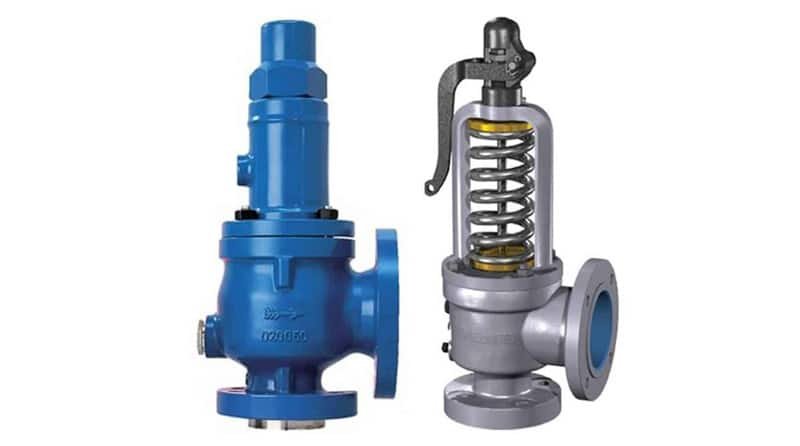
Pressure Relief Valves and Hydraulic Balancing Valves for system protection and optimization
Pressure Control Fundamentals:
- Pressure Relief Valves (PRV): Protect equipment by relieving excess pressure (Safety requirement)
- Balancing Valves: Optimize hydraulic systems by controlling flow distribution
- System Safety: PRVs are critical safety devices required by codes and standards
- Energy Efficiency: Balancing valves reduce energy consumption in HVAC systems
Valve Type Comparison:
| Valve Type |
Primary Function |
Operation |
Pressure Range |
Size Range |
Applications |
| Safety Relief Valve |
Overpressure protection |
Automatic (spring) |
0.5 - 20 bar |
½" - 8" |
Boilers, pressure vessels |
| Pilot Operated PRV |
High capacity relief |
Pilot controlled |
10 - 100 bar |
2" - 12" |
Large systems, pipelines |
| Manual Balancing Valve |
Flow adjustment |
Manual setting |
PN16 - PN25 |
½" - 12" |
HVAC systems |
| Dynamic Balancing Valve |
Automatic flow control |
Self-regulating |
PN16 - PN25 |
½" - 8" |
Variable flow systems |
Safety Note: Pressure Relief Valves are critical safety devices. Installation and maintenance must comply with local codes and standards (ASME, PED, etc.).
PRV Types & Applications:
A) Safety Relief Valve
- Operation: Spring-loaded, direct acting
- Set Pressure: 0.5 - 20 bar
- Sizes: ½" - 8" (DN15 - DN200)
- Applications: Boilers, pressure vessels, air receivers
- Standards: ASME Section I & VIII, PED
B) Spring Loaded PRV
- Operation: Adjustable spring tension
- Set Pressure: 1 - 40 bar
- Sizes: ½" - 6" (DN15 - DN150)
- Applications: Process equipment, pipelines
- Features: Adjustable, tamper-proof
C) Pilot-Operated PRV
- Operation: Pilot valve controls main valve
- Set Pressure: 10 - 100 bar (high pressure)
- Sizes: 2" - 12" (DN50 - DN300)
- Applications: Large capacity systems, gas pipelines
- Advantages: High capacity, tight shutoff
- ASME Section I: Power boilers
- ASME Section VIII: Pressure vessels
- API 526: Flanged steel PRVs
- API 527: Seat tightness
- ISO 4126: Safety devices
- PED 2014/68/EU: European directive
Materials & Temperature Ratings:
| Material |
Temperature Range |
Application |
Standards |
| Bronze |
−10 to +200°C |
Water & low pressure systems |
ASTM B62 |
| Carbon Steel |
−29 to +400°C |
Steam, oil, gas |
ASTM A216 WCB |
| Stainless Steel 316 |
−50 to +450°C |
Corrosive fluids |
ASTM A351 CF8M |
| Alloy (Inconel, Hastelloy) |
up to +600°C |
High temp/chemical |
Special alloys |
- Set Pressure: Typically 110% of MAWP
- Capacity: Based on worst-case scenario
- Fluid: Gas, liquid, steam, two-phase
- Back Pressure: Conventional vs balanced bellows
- Blowdown: Typically 3-7% of set pressure
- Overpressure: Usually 10% for liquids, 3% for steam
- Install vertically with spindle upright
- Discharge piping properly sized and supported
- No valves between PRV and protected equipment
- Regular testing and certification required
- Consider thermal expansion and vibration
- Follow manufacturer's installation instructions
Energy Saving: Proper hydraulic balancing can reduce pump energy consumption by 15-20% in HVAC systems.
Balancing Valve Types:
+A) Manual Balancing Valve
- Operation: Manual adjustment with memory stop
- Pressure: PN16 - PN25
- Sizes: ½" - 12" (DN15 - DN300)
- Kv Values: 0.1 - 400 m³/h
- Applications: HVAC systems, heating circuits
- Features: Test ports, scale for setting
B) Dynamic Balancing Valve
- Operation: Self-regulating, automatic
- Pressure: PN16 - PN25
- Sizes: ½" - 8" (DN15 - DN200)
- Flow Range: 0.1 - 300 m³/h
- Applications: Variable flow systems
- Features: Maintains constant flow
C) Pressure Independent Balancing Valve (PI-Valve)
- Operation: Combined flow limiter and control valve
- Pressure: PN16 - PN25
- Sizes: ½" - 6" (DN15 - DN150)
- Cv Values: 0.5 - 50
- Applications: Modern HVAC, fan coils, AHUs
- Advantages: Energy saving, plug-and-play
- Reduced energy consumption
- Improved comfort conditions
- Reduced noise levels
- Extended equipment life
- Lower maintenance costs
- Optimized system performance
Materials & Temperature Ratings:
| Material |
Max Temperature |
Common Uses |
Features |
| Brass |
~120°C |
HVAC water systems |
Economical, good corrosion resistance |
| Bronze |
~150°C |
Heating systems & chilled water |
Better corrosion resistance |
| Stainless Steel |
~200°C |
Corrosive or high temp fluids |
Excellent corrosion resistance |
| PP-R / PVC |
~60–80°C |
Plastic piping systems |
Chemical resistance, lightweight |
- AHU cooling coils
- Fan coil units
- Chiller primary/secondary circuits
- Cooling towers
- Process cooling
- Boiler circuits
- Radiator systems
- Underfloor heating
- Heat exchanger circuits
- District heating
- Process cooling circuits
- Heat recovery systems
- Industrial cooling towers
- Chemical processes
- Manufacturing facilities
Summary of Available Models:
| Type |
Example Model |
Size Range |
Key Specifications |
Applications |
| Pressure Relief Valve |
SRV-100 Series |
½" - 4" (DN15 - DN100) |
Set pressure: 0.5–20 bar, Spring loaded |
Boilers, pressure vessels |
| Pilot Operated PRV |
Pilot-PRV Series |
3" - 12" (DN80 - DN300) |
Set pressure: 10–100 bar, High capacity |
Large systems, gas pipelines |
| Manual Balancing Valve |
BMV-25 Series |
DN25/1" - DN200/8" |
Kv: 4.5, PN16, Test ports |
HVAC systems, heating |
| Dynamic Balancing Valve |
DBV-40 Series |
DN40/1½" - DN150/6" |
Auto flow control, PN25 |
Variable flow systems |
| PI Balancing Valve |
PI-32 Series |
DN32/1¼" - DN125/5" |
Cv: 6.5, Pressure independent |
Modern HVAC, fan coils |
- Set Pressure: Adjustable or fixed
- Blowdown: 3-7% (adjustable on some models)
- Overpressure: 10% for liquid, 3% for steam
- Capacity: Certified per API/ASME
- Seat Tightness: API 527 Class IV or better
- Temperature Range: -196°C to +550°C
- Flow Coefficient (Kv/Cv): 0.1 - 400
- Pressure Rating: PN16, PN25, ANSI 150
- Accuracy: ±5% of set value
- Temperature Range: -10°C to +120°C
- Connection: Flanged, threaded, grooved
- Test Ports: G½, ¼ NPT, or quick coupling
Selection & Application Guide
PRV Selection Criteria:
- Fluid Type: Gas, Liquid, Steam, Two-phase
- Required Capacity: Based on maximum credible overpressure
- Set Pressure: Typically 110% of MAWP
- Back Pressure: Constant vs variable, % of set pressure
- Temperature: Operating and relieving temperature
- Code Requirements: ASME, PED, API, ISO
Balancing Valve Selection:
- System Type: Constant vs variable flow
- Required Flow: Design flow rate (m³/h)
- Pressure Drop: Available ΔP for valve
- Kv/Cv Value: Based on flow and ΔP
- Accuracy Required: ±5%, ±10%
- Control Type: Manual, automatic, pressure independent
Application Matrix:
| Application |
Recommended Valve Type |
Key Features Required |
Typical Size |
Standards |
| Steam Boiler |
Safety Relief Valve |
ASME certified, Steam trim |
2" - 4" |
ASME Section I |
| Air Receiver |
Spring Loaded PRV |
Air service, Brass/CS construction |
1" - 2" |
PED, ASME |
| Chemical Reactor |
Pilot Operated PRV |
SS316, High capacity |
3" - 6" |
ASME Section VIII |
| HVAC Chilled Water |
PI Balancing Valve |
Pressure independent, Auto flow |
1½" - 4" |
EN 215, ISO 9001 |
| Heating System |
Manual Balancing Valve |
Test ports, Memory stop |
¾" - 3" |
EN 12266 |
| Industrial Cooling |
Dynamic Balancing Valve |
Self-regulating, Wide ΔP range |
2" - 6" |
ISO 5208 |
- Install vertically with spindle upright
- Discharge piping should be same size as valve outlet
- Support discharge piping to prevent stress on valve
- No isolation valves between PRV and protected equipment
- Consider thermal expansion in piping design
- Regular testing and maintenance required
- Install with flow direction arrow correctly oriented
- Ensure straight pipe lengths before and after valve
- Provide access for measurement and adjustment
- Use proper gaskets and sealing materials
- Calibrate measuring equipment before use
- Document settings for future reference